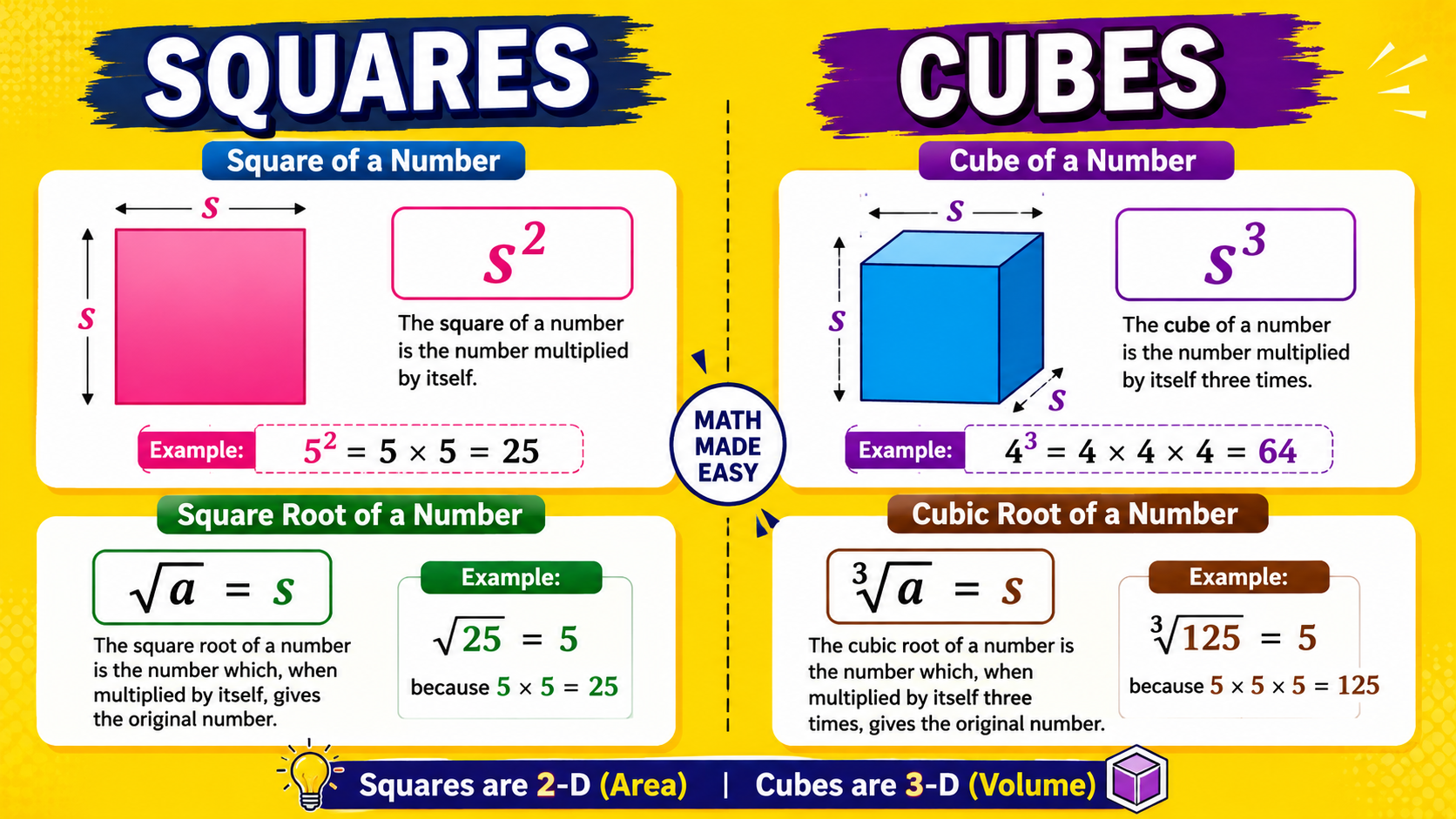
Class 8 Maths NCERT Solutions for Ganita Prakash Part 1 Chapter 1 – A Square and a Cube provide clear and easy-to-follow solutions to the questions and activities given in the new NCERT Mathematics textbook for Class 8.
This chapter introduces students to square numbers, perfect squares, square roots, cube numbers and cube roots through patterns, puzzles and mathematical exploration. Students also learn different methods for finding square roots and cube roots and explore useful patterns involving squares and cubes.
The chapter is part of Ganita Prakash Part 1, the new Class 8 NCERT Mathematics textbook being used from the 2026–27 academic year.
Watch Video:Class 8 Maths Ganit Praksh NCERT Solutions-1 | A Square & A Cube
What You’ll Learn In – A Square and a Cube
In this chapter, students will learn about:
- Square numbers
- Perfect squares
- Properties of perfect squares
- Patterns in square numbers
- Square roots
- Finding square roots by prime factorisation
- Finding square roots using the long division method
- Estimating square roots
- Cube numbers
- Perfect cubes
- Properties and patterns of cubes
- Cube roots
- Finding cube roots using prime factorisation
- Estimating cube roots
- Patterns involving cube numbers
These concepts form the foundation for working with squares, cubes and roots in higher classes.
Important Concepts from A Square and a Cube
1. Square Numbers
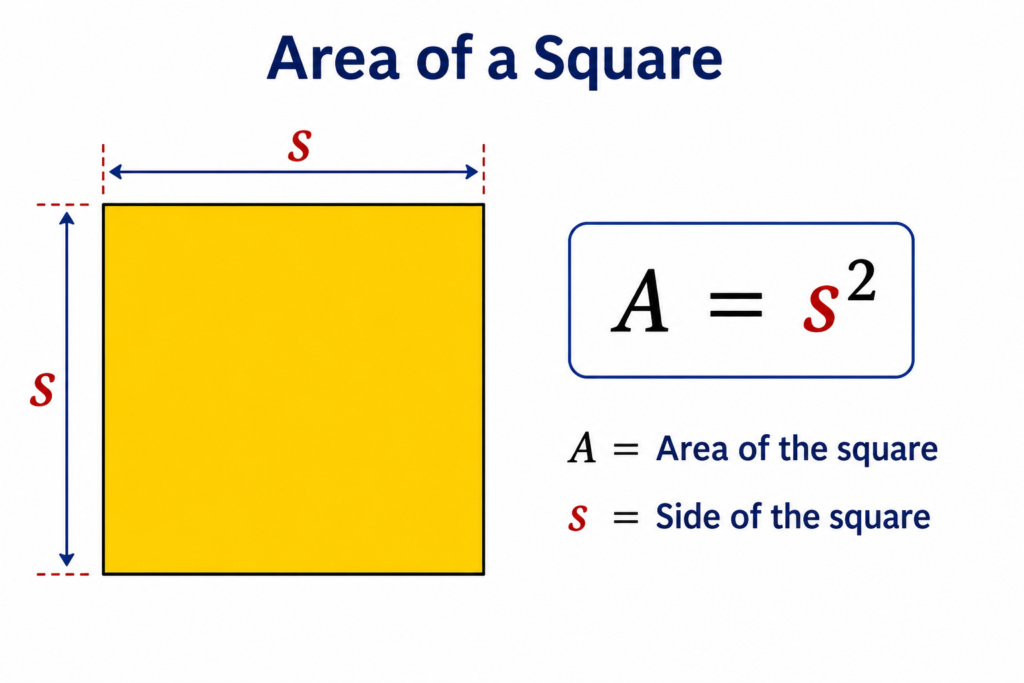
A number obtained by multiplying a number by itself is called its square.
For example: 52=5×5=25
Therefore, 25 is a square number.
Similarly: 102=10×10=100
So, 100 is a perfect square.
2. Perfect Squares
Numbers such as:
1, 4, 9, 16, 25, 36, 49, 64, 81 and 100
are perfect squares because each can be expressed as the product of a whole number with itself.
3. Square Root
The square root of a number is the number which, when multiplied by itself, gives the original number.
For example: √(64) = 8
because: 8×8=64
4. Cube Numbers
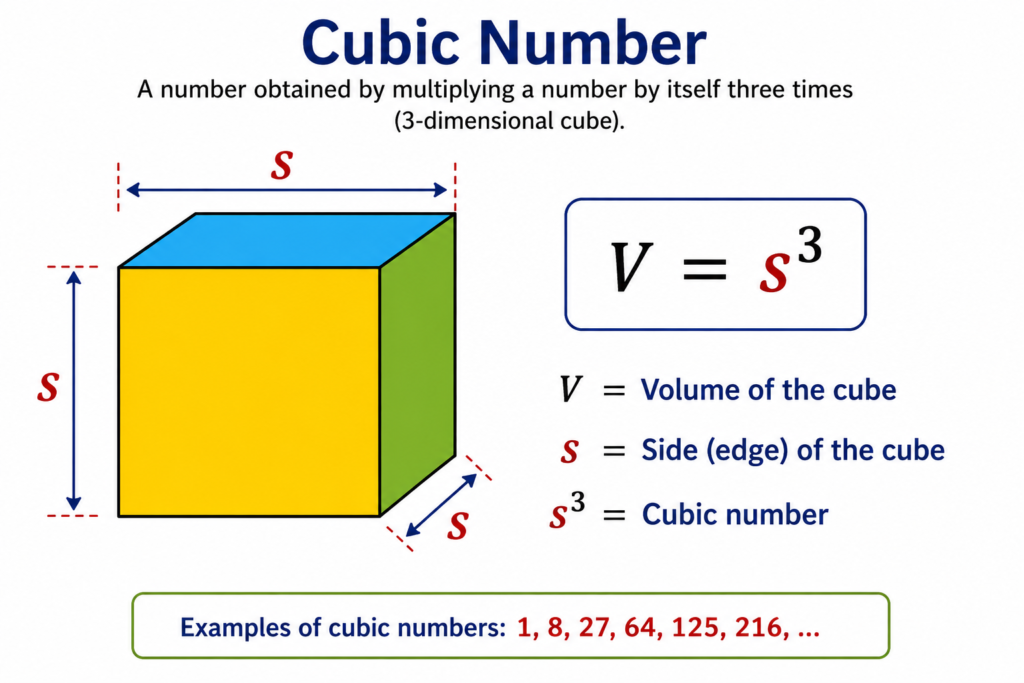
A number obtained by multiplying a number by itself three times is called its cube.
For example: 4=4×4×4=64
Therefore, 64 is a perfect cube.
Some perfect cubes are:
1, 8, 27, 64, 125, 216, 343, 512 and 729.
The textbook also explores patterns in cube numbers and asks students to identify relationships between numbers and their cubes
Therefore, 64 is a perfect cube.
Some perfect cubes are:
1, 8, 27, 64, 125, 216, 343, 512 and 729.
The textbook also explores patterns in cube numbers and asks students to identify relationships between numbers and their cubes.
5. Cube Root
The cube root of a number is the number which, when multiplied by itself three times, gives the original number.
For example:
Because: 5×5×5=125
Watch Video:Class 8 Maths Ganit Praksh NCERT Solutions-2 | A Square & A Cube
Class 8 Ganita Prakash Chapter 1 – Figure It Out Questions
The chapter contains Figure It Out questions that encourage students to apply the concepts of squares, square roots, cubes and cube roots rather than simply memorising formulas.
For example, students are asked to identify numbers that are not perfect squares and investigate patterns in square and cube numbers.
How to solve these questions
- Read the question carefully.
- Identify whether it involves a square, cube, square root or cube root.
- Look for useful number patterns.
- Apply the appropriate method.
- Show all calculation steps.
- Check the answer.
How to Use These Class 8 Ganita Prakash Solutions
Try to solve every question yourself before looking at the solution.
If you cannot solve a question, read the explanation carefully and identify the mathematical concept or method being used. Then try solving the question again without looking at the answer.
This approach will help you:
- Understand mathematical concepts
- Improve calculation skills
- Recognise number patterns
- Develop problem-solving ability
- Avoid common mistakes
- Prepare effectively for school examinations
Class 8 maths Ganita Prakash chapter 1 | A Square and A Cube | Exam Questions: Watch Full video
Conclusion
Class 8 Maths Ganita Prakash Part 1 Chapter 1 – A Square and a Cube introduces important concepts related to squares, cubes, square roots and cube roots. By practising the textbook questions and understanding the patterns explained in the chapter, students can develop a strong foundation in number concepts.
Use the chapter-wise and question-wise solutions on Future Study Point to check your answers, understand the correct method and practise more questions.